Heating technology
Infrared vs Convection Heaters: The Energy Science Most Buyers Never See
Why a 2,000W infrared heater feels warmer than a 2,000W convection heater — and why the comparison is not about wattage, it is about how your body receives the energy.
Two different physics, not two different wattages
A convection heater and an infrared heater at the same rated wattage will feel dramatically different in the same room. That is not marketing. It is two different mechanisms of energy transfer:
- Convection heats the air. A resistive element or gas flame warms air, the air expands, the warm air rises, the cool air falls, and a slow circulation pattern develops. The room air temperature rises until heat loss through walls, windows, and ventilation matches the input. Your body is warm because the air around you is warm.
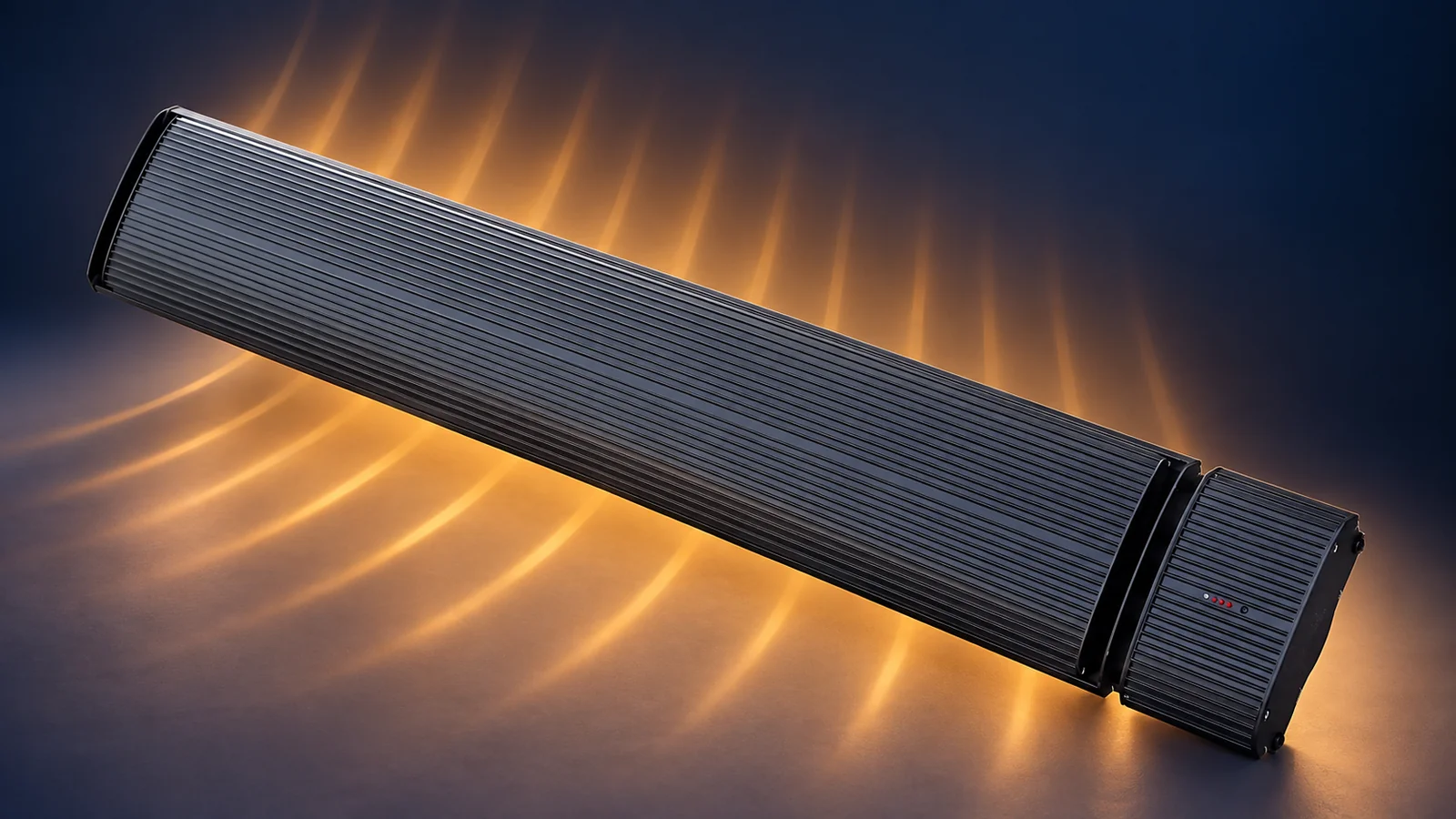
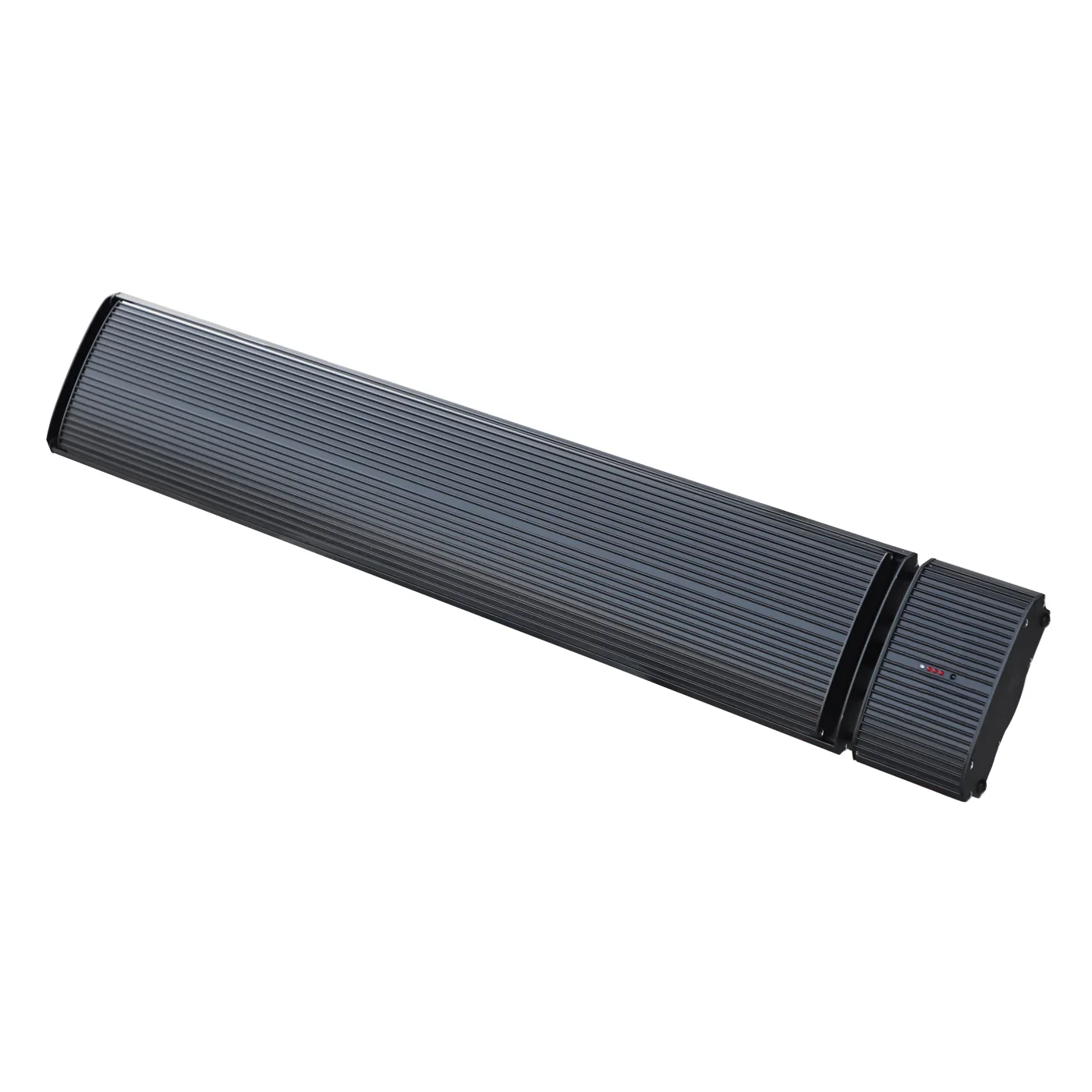
- Infrared heats the surfaces in the line of sight. A far-infrared emitter (a quartz halogen lamp, a ceramic plate, or a metal-fiber element) radiates electromagnetic energy in the 3–100 μm wavelength band. That radiation hits the floor, the walls, the furniture, and — most importantly — your skin. Your skin absorbs the radiation and warms directly, before the air temperature has changed at all.
The result: a 2,000W infrared heater can make a 20 m² patio comfortable in 30 seconds, while a 2,000W convection fan heater is still trying to warm 50 m³ of air 5 minutes later.
The comfort equation most people miss
A standard measure of radiant heating comfort is mean radiant temperature (MRT) — the uniform temperature of an imaginary enclosure in which the radiant heat transfer from the human body equals the radiant heat transfer in the actual, non-uniform environment. In a convection-heated room, MRT equals air temperature. In an infrared-heated room, MRT is often 3–7°C higher than the air temperature at head height.
That gap is why an infrared-heated space feels comfortable at 17–18°C air temperature while a convection-heated space needs 21–22°C to feel the same. Over a heating season, that 4°C setpoint difference can mean 20–30% less electricity at the meter.
Where infrared wins decisively
| Use case | Why infrared is better |
|---|---|
| Outdoor / semi-outdoor (patio, terrace, smoking area) | Air is moving or absent. Convection cannot build up. Infrared heats people and surfaces directly. |
| Spot heating (a workstation, a single restaurant table) | You do not need to heat the whole 100 m² hall. Heat 6 m² around the table and stop. |
| High-ceiling spaces (warehouses, churches, gyms) | Hot air rises to the ceiling and is wasted. Infrared heats the floor and the people on it. |
| Spaces with high air-change rate (workshop doors opening, loading bays) | Every cubic meter you heat with convection is immediately replaced. Infrared re-heats surfaces in seconds. |
| Ventilation-first spaces | If the brief is "fresh air continuously, occupants warm", infrared is the only tool that does both. |
Where convection still makes sense
- Bedrooms and small enclosed rooms where you want a slow, even temperature rise overnight. A convection heater left on low is hard to beat.
- Whole-home heating in well-insulated homes where you want every room at the same setpoint. A central heated-air system (or underfloor hydronic) is more even.
- Defrosting a frozen pipe or warming a cold closet. Convection wins on cheap, slow background heat.
These are real, valid use cases. The marketing claim that "infrared is always better" is wrong. The honest claim is that infrared is the right tool for the cases in the table above, and convection is the right tool for the cases in this one.
What to look for in an infrared heater
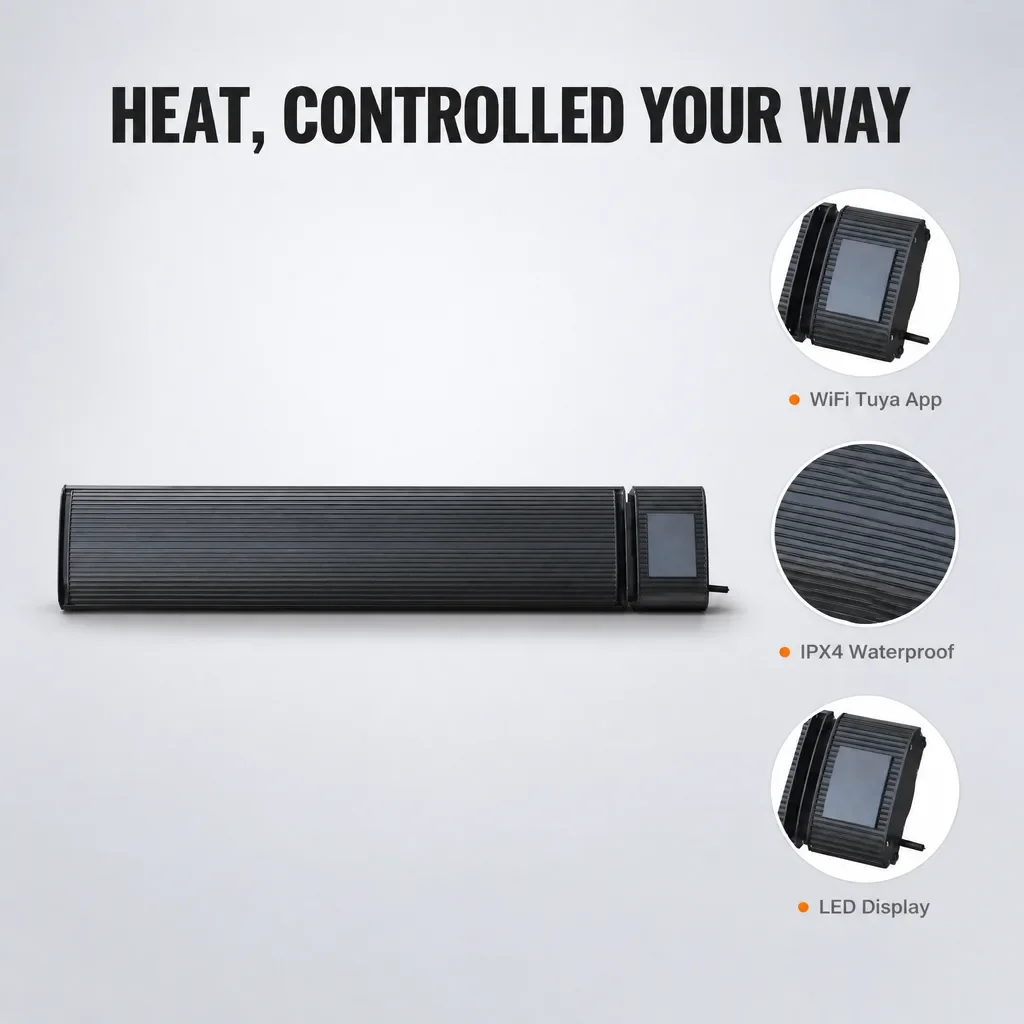
- Emitter wavelength. Near-infrared (0.7–1.4 μm) is short, hot, and visible — it produces the orange glow of a halogen lamp. Far-infrared (3–100 μm) is invisible, gentler, and penetrates skin more comfortably. Most quality patio and indoor heaters use far-infrared ceramic or quartz elements.
- Reflector geometry. A polished aluminum reflector behind the element determines how directional the beam is. A well-designed reflector throws 80%+ of the radiant energy into a 60° cone; a poor one wastes 30% of the energy heating the back of the heater housing.
- IP rating. For outdoor or bathroom use, IP65 or higher. A heater without an IP rating is indoor-only, period.
- Safety electronics. Tip-over switch, overheat cutout, and (for ceiling-mount units) a safety chain or cable. Anything less is a lawsuit waiting to happen.
The bottom line
If you are heating a defined zone in a drafty, high-ceiling, or outdoor space, infrared is the rational choice. It is not about wattage. It is about delivering the energy to the body, not to the empty air around it.
Tell us the space, the ceiling height, the country, and how cold it gets in winter. We will spec the right heater — infrared, convection, or a combination — for free.