Cooling economics
Evaporative Cooler vs Air Conditioner: The Honest Running-Cost Comparison
How much does an evaporative cooler really cost to run vs an air conditioner? We break down the real numbers from a TÜV-verified manufacturer — 25% vs 100% operating cost, and the trade-offs you should know before buying.
The short answer
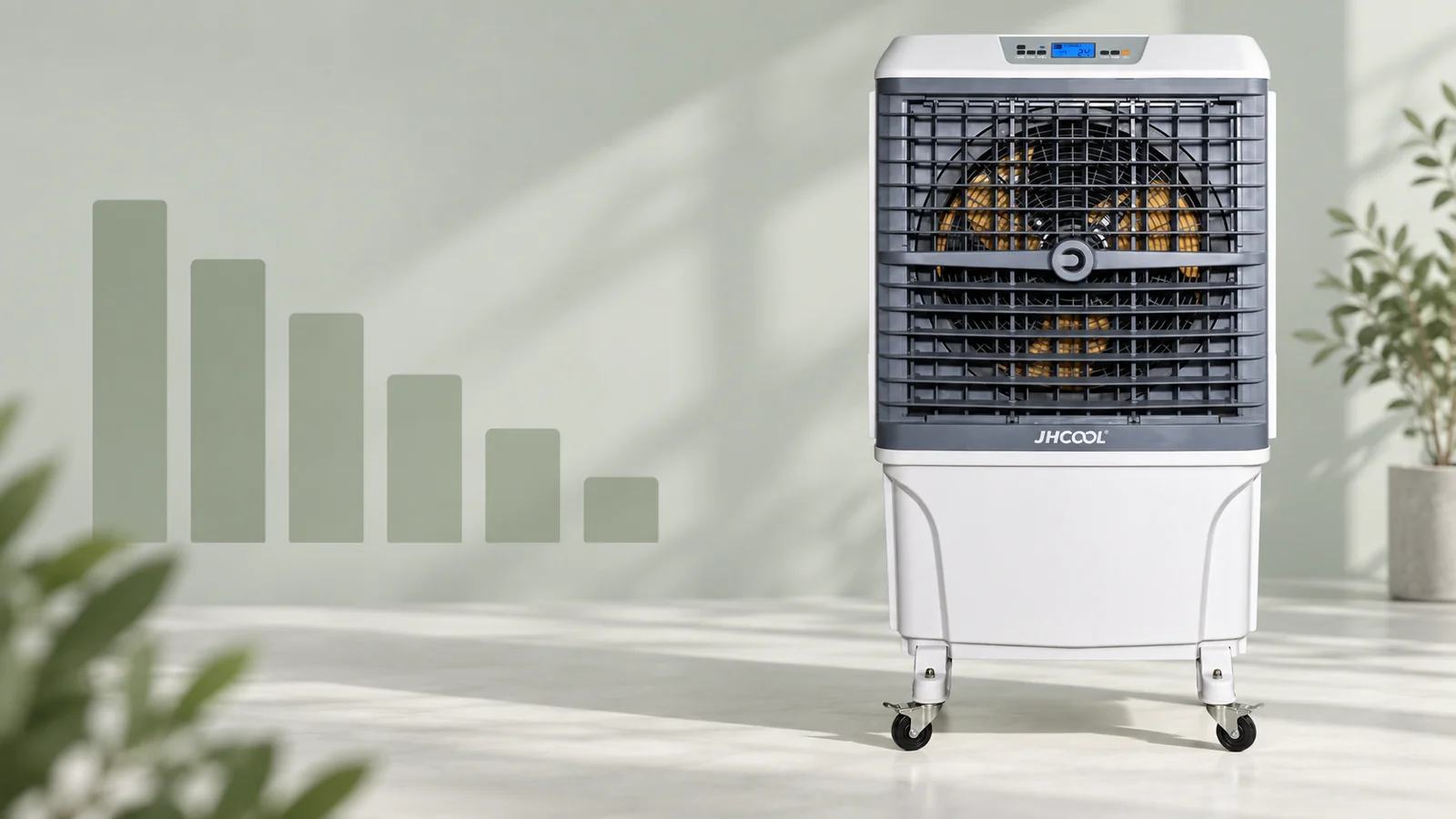
A portable evaporative cooler (like the JHCOOL JH802 or the 30 Series industrial line) uses about 25% of the electricity of a comparable window or split air conditioner for the same delivered cooling feel in dry climates. In a 35°C, 30%-humidity warehouse, a 380W evaporative unit moving 3,000 m³/h replaces a 1,500W split A/C — and your monthly bill reflects it.
The catch: it only works where the air is dry. In Singapore, Lagos or Miami you will be disappointed. In Madrid, Mexico City, Phoenix, Tehran, or inland Australia, it will change how you think about summer cooling.
How the running cost actually breaks down
| Scenario | Evaporative cooler (380W) | Split A/C (1,500W) |
|---|---|---|
| 8 hours/day, 30 days | ~91 kWh | ~360 kWh |
| At €0.18/kWh | €16.38 / month | €64.80 / month |
| Annual (6-month cooling season) | €98 | €389 |
| 5-year cumulative | €491 | €1,944 |
The evaporative cooler is roughly 4× cheaper to run. Over a typical 5-year ownership window, that is about €1,450 saved per unit — enough to buy the cooler twice over.
The energy math is not marketing. It follows directly from physics: evaporative cooling is a phase-change process driven by latent heat of vaporization, not by a compressor pushing refrigerant against a temperature gradient.
What the 380W number actually delivers
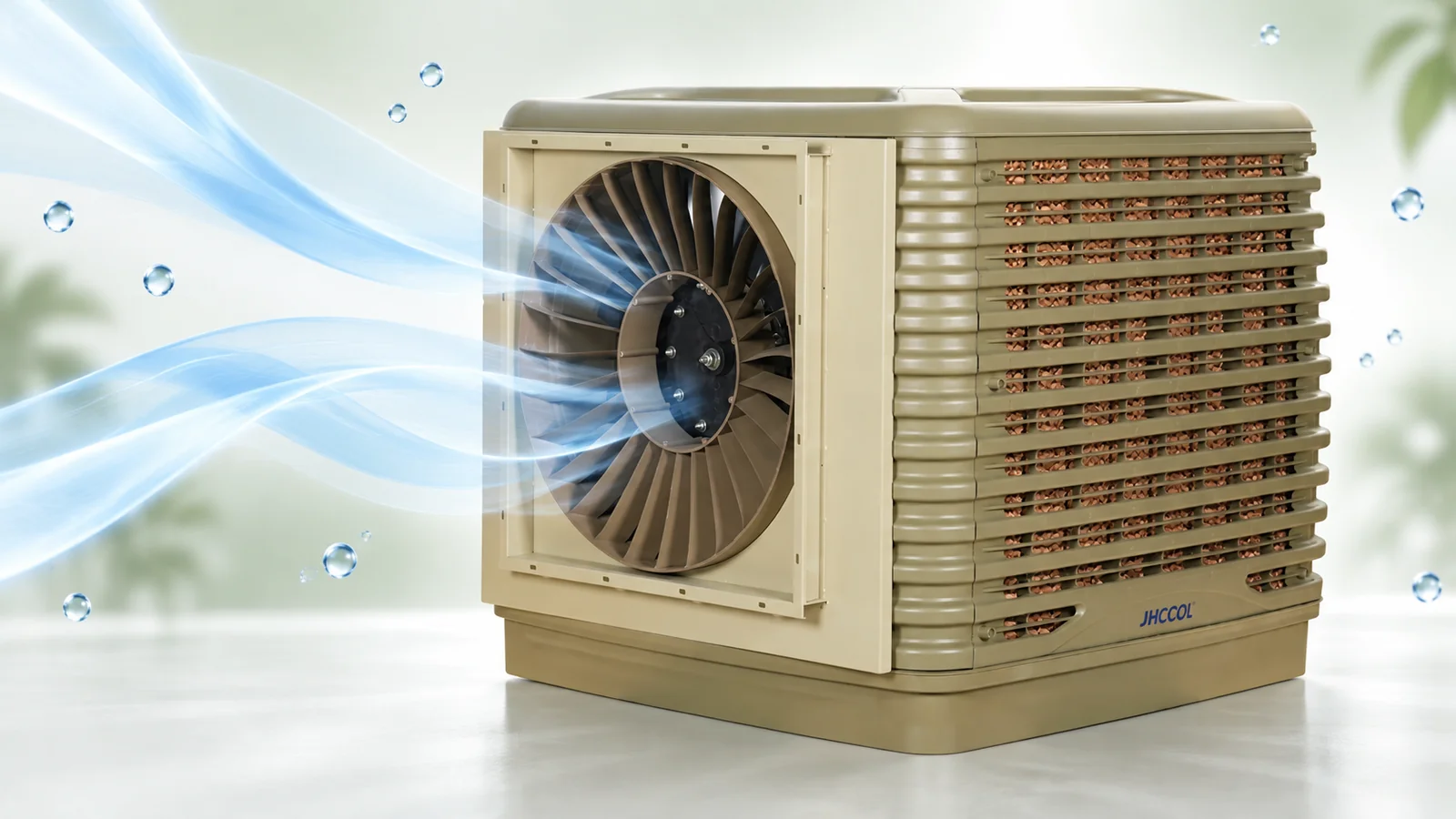
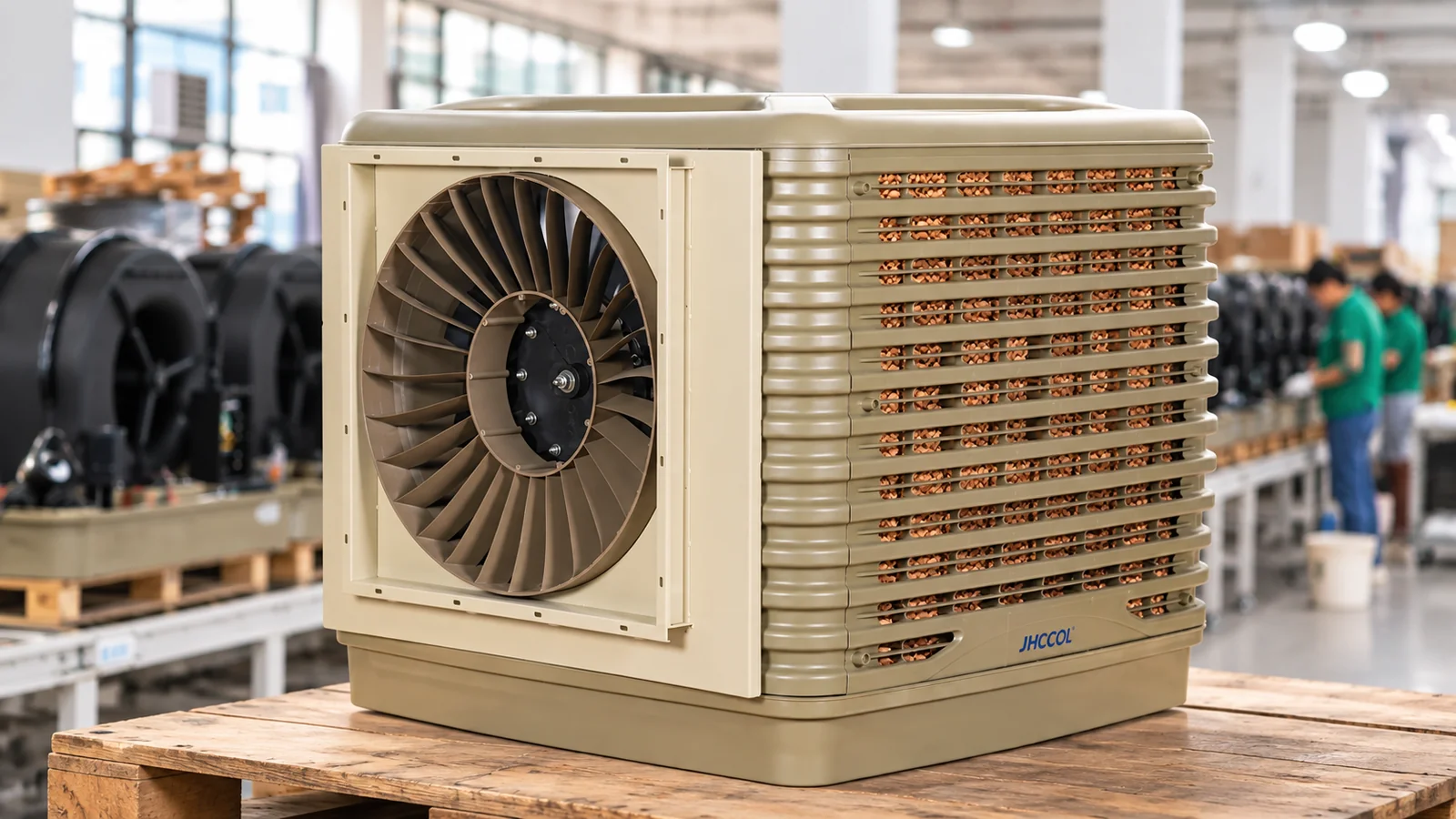
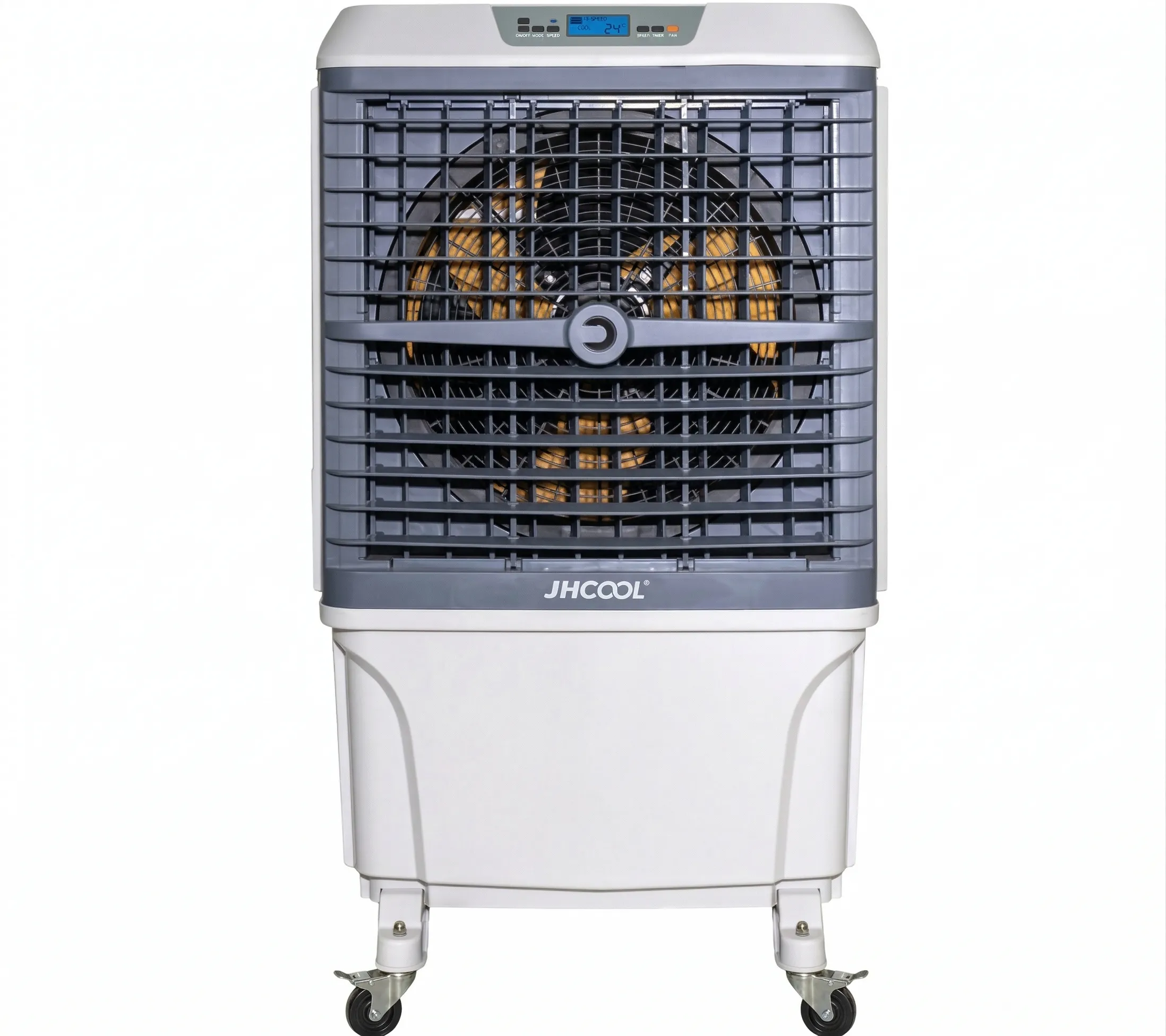
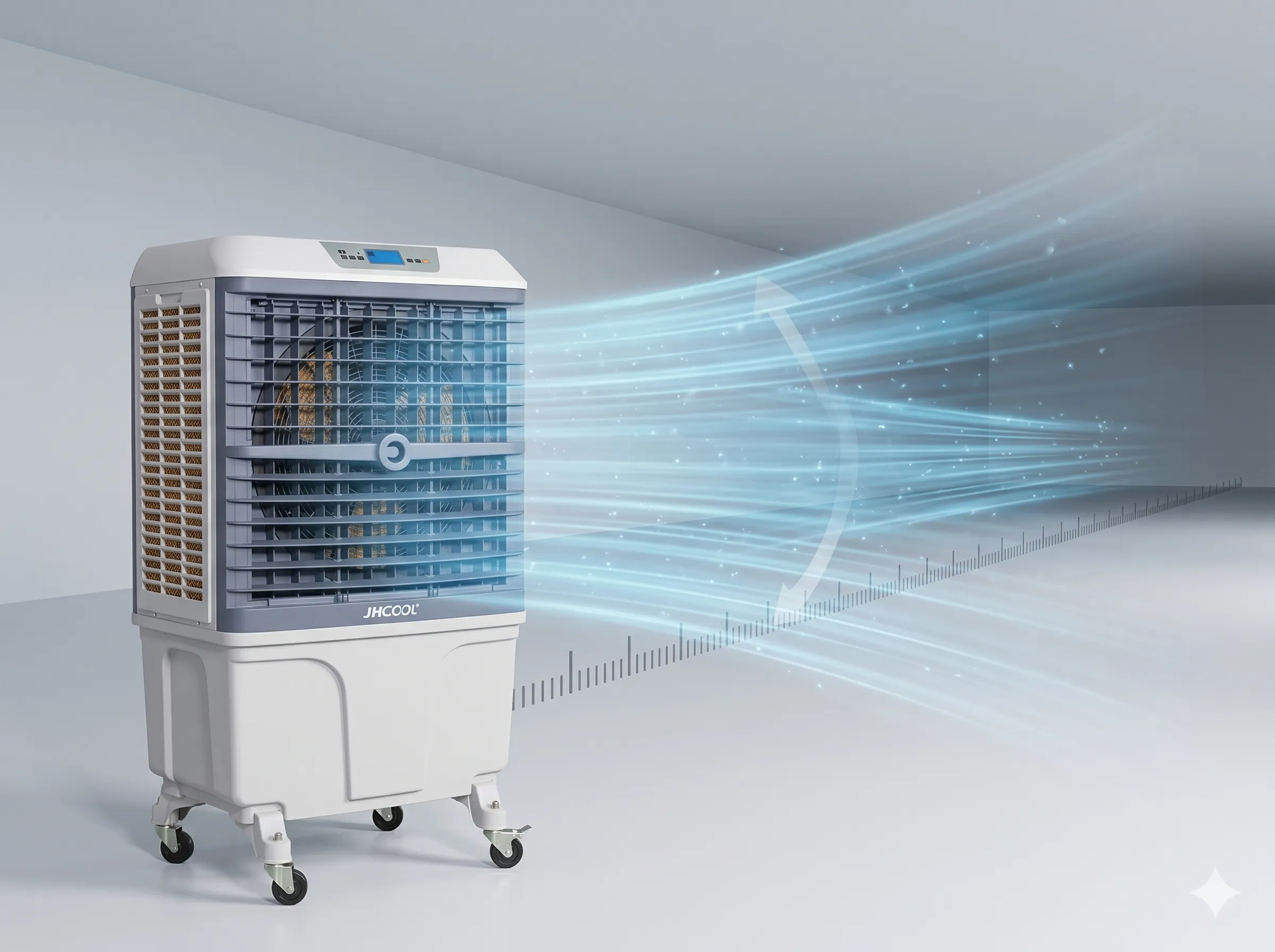
JHCOOL's 30 Series industrial cooler moves up to 30,000 m³/h at 380W, with a measured air-temperature drop of 8–15°C depending on inlet humidity. That is enough to cool a 200–400 m² open warehouse, workshop, or auto repair bay to a comfortable working range in dry-summer climates.
For residential use, the JH802 (3,000 m³/h at 110W) covers a 25–40 m² living room or studio with a typical 6–10°C drop, on a single-phase 220V plug. No installation. No outdoor condenser. Move it with the seasons.
When you should NOT buy an evaporative cooler
Be honest with yourself on these three points:
- Relative humidity above ~65% in summer. Evaporative cooling works by adding moisture to the air. If the air is already saturated, the math stops working. Use a psychrometric chart or a 5-minute humidity check before buying.
- You need closed-loop, below-ambient cooling below 18°C. Evaporative coolers deliver air at ambient wet-bulb temperature, typically 18–24°C in dry climates. They will not give you 16°C in a sealed server room. A refrigerated A/C is the only answer there.
- You have hard water with heavy mineral content. Mineral dust will accumulate on the cooling pads. The unit still works, but maintenance intervals shrink from monthly to weekly. Use softened or RO water if this applies.
Where it makes the most sense
Across the 100+ countries JHCOOL ships to, the strongest fit is consistently:
- Industrial and commercial spaces in arid and semi-arid regions — factories, warehouses, workshops, agricultural processing, auto garages, logistics hubs.
- Outdoor and semi-outdoor hospitality — restaurant patios, beer gardens, resort terraces, open-air markets.
- Residential use in dry-summer continental climates — inland Spain, central Italy, the Hungarian and Romanian plains, northern Mexico, the U.S. Mountain West, inland Turkey, northern Iran, the South African highveld, inland Australia.
In all three cases, the buyer is replacing either no cooling at all, or a compressor A/C that is fighting the climate. The evaporative cooler wins on first cost, running cost, simplicity, and ventilation air quality.
The bottom line
If you are in the right climate and you can ventilate the space, an evaporative cooler is the most economically rational cooling purchase available — by a factor of four. If you are not, no amount of marketing will fix the physics. Choose honestly.
Have a specific space in mind? Send us the dimensions, the ceiling height, and the city — we will spec a unit and a quantity for free, no commitment.