Seasonal planning
The Record-Breaking 2026–27 "Super El Niño" Winter Is Coming: Why Far-Infrared Heating Is the Smart Answer
The WMO warns the 2026–27 El Niño could be the strongest ever recorded — and Europe faces a thin energy buffer this winter. Why JHHEATSUP far-infrared heaters are the rational choice for a volatile heating season.
What the 2026–27 winter looks like
The signals from the climate agencies are converging, and they are not subtle:
- The World Meteorological Organization has warned that the 2026–27 El Niño could be the strongest ever recorded, on top of an already-elevated baseline ocean temperature.
- The UK Met Office, cited by HuffPost and the BBC, has placed the probability of a record-strong event at historically high levels.
- China Daily and the South China Morning Post have reported on the Asia-Pacific implications: colder winters in northern China, more disruptive snow in central China, and elevated heating demand across the continent.
- Saxo Bank's autumn outlook and Bloomberg's energy coverage both flag Europe as the most exposed region this winter — a combination of a thin gas buffer, a cold start to the heating season, and a renewables buildout that is not yet large enough to absorb a sustained cold snap.
- A widely circulated YouTube analysis by a UK-based climate commentator (October 2026) summarized the consensus: plan for a colder, longer, more expensive winter than the 10-year average.
For anyone responsible for keeping a building warm this winter — a homeowner, a facility manager, a restaurant operator, a warehouse owner — the practical question is not whether heating costs will rise, but by how much and what to do about it.
Why far-infrared is the rational response
A standard 2,000W convection space heater warming a 20 m² room must first heat the 50 m³ of air in the room to the target temperature. That air is constantly losing heat through walls, windows, doors, and ventilation. The convection heater runs until the heat loss equals the input — a slow, lossy, electricity-intensive process.
A 2,000W far-infrared heater warming the same room heats the people and surfaces in the line of sight directly. The air temperature lags behind, but mean radiant temperature rises immediately. The occupants are comfortable at a 3–4°C lower air temperature than they would need with convection. That setpoint difference, sustained across a heating season, is roughly 20–30% less electricity at the meter.
In a winter where every kWh counts, that is the difference between a manageable bill and an uncomfortable one.
The European energy context
Three structural reasons make this winter different:
- Gas storage across the EU entered October 2026 well below the 5-year average. A cold December–February will draw storage down fast, and wholesale gas prices will respond. Electricity prices follow gas prices in most European markets.
- The French nuclear fleet is operating at reduced availability versus the 2020–2022 baseline, removing a large low-marginal-cost supply block from the European grid. The marginal price of electricity in cold snaps is set by gas-fired generation, which is the most expensive source on the system.
- Renewables are growing but not yet large enough to absorb a sustained cold snap with low wind. In the December 2025 cold spell, UK wind output fell below 2 GW for 36 hours — a 20-year low — and gas-fired generation picked up the slack at a price.
For the homeowner and the small business, the implication is clear: reduce electricity consumption for heating, and shift to the most efficient form of electric heating available. For most use cases, that is far-infrared.
Where far-infrared wins this winter
| Scenario | Why far-infrared is the right call |
|---|---|
| Homeowner heating a living room or bedroom 4–6 hours a day | Lower setpoint (17–18°C instead of 21–22°C) means 20–30% less electricity. |
| Restaurant / café patio heating October–April | Outdoor and semi-outdoor air is constantly replaced; convection cannot build up. Far-infrared heats people directly. |
| Warehouse / workshop heating where full air temperature is unnecessary | Spot-heat the work zones. Leave the ceiling cold. |
| Backup heating for heat-pump homes during a cold snap | A 2,000W far-infrared panel costs €0.64/hour to run, vs a 3 kW electric space heater at €0.96/hour — and feels warmer at the same wattage. |
| Construction sites, pop-up venues, semi-permanent outdoor structures | No installation, no flue, no gas line. Plug in and switch on. |
The JHHEATSUP line for this winter
JHHEATSUP — the infrared heating brand of Fujian Jinghui Environmental Technology — offers a focused range of far-infrared heaters designed for exactly the conditions described above:
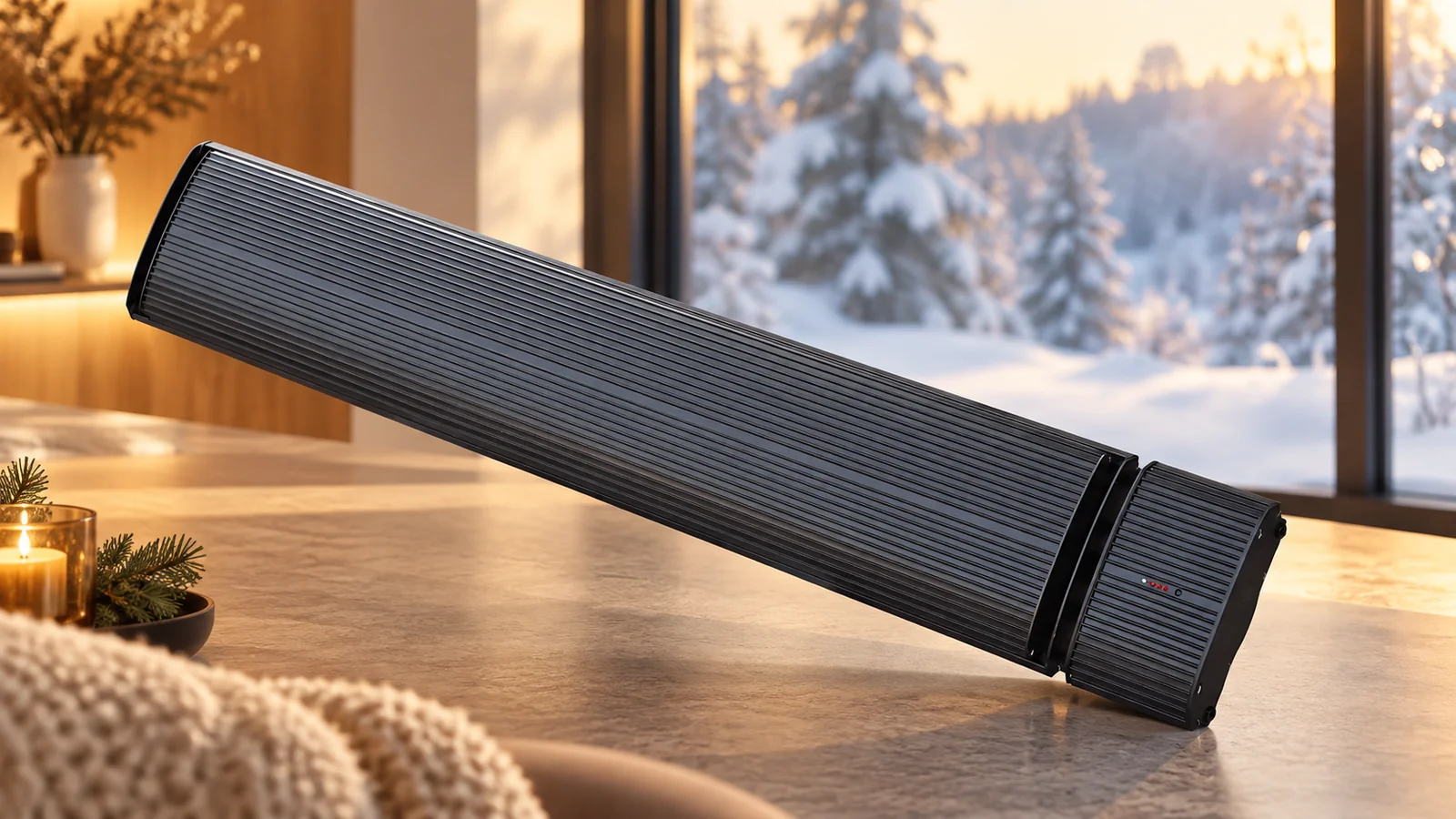
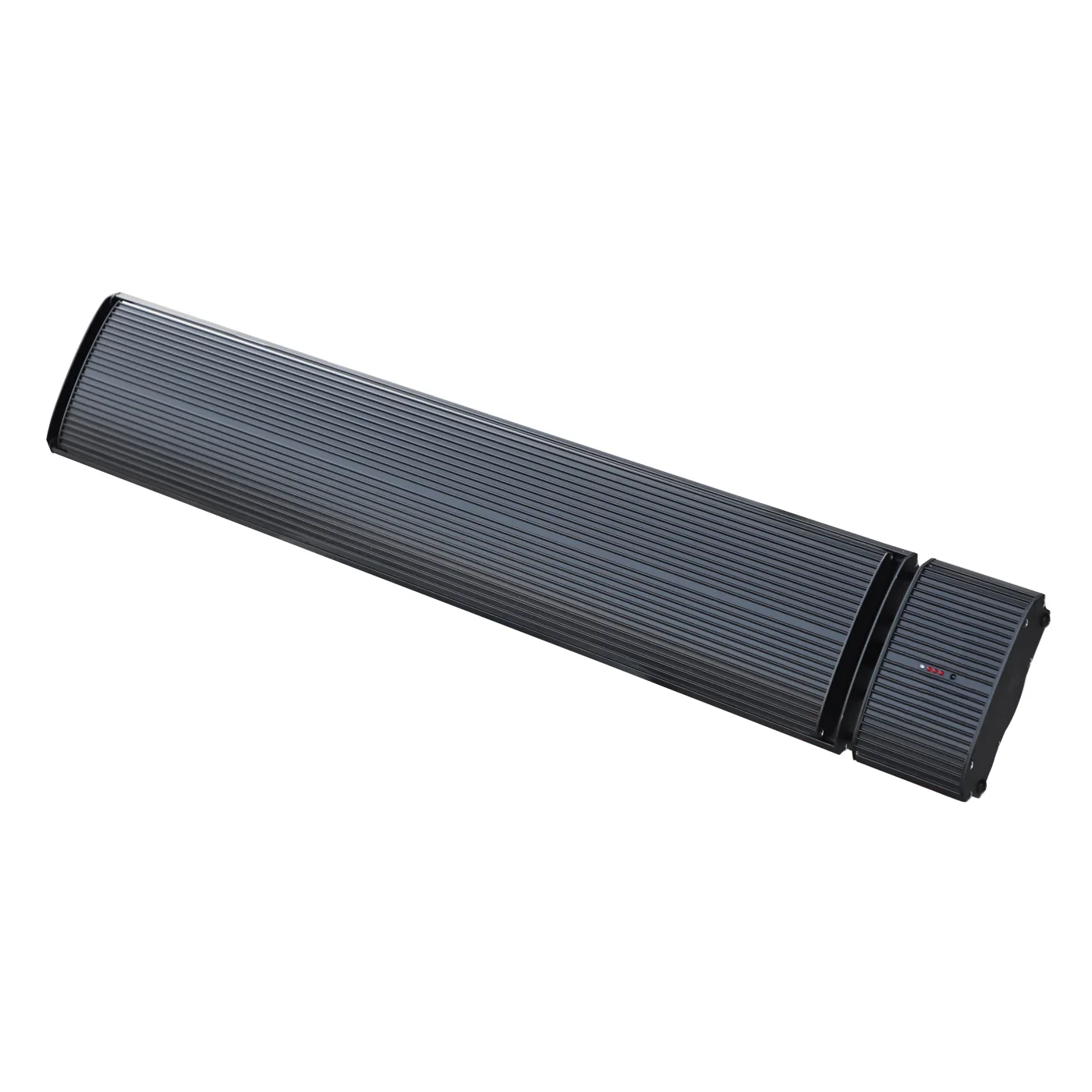
- Wall-mounted and ceiling-mounted patio heaters, 1,500W to 3,000W, IP65 rated for outdoor and bathroom use.
- Freestanding portable infrared heaters with tip-over and overheat protection, for spot heating in living rooms, bedrooms, and small commercial spaces.
- Industrial infrared radiant panels for warehouse and workshop spot heating, 3,000W to 6,000W, designed for ceiling mounting at 3.5–5.0 m.
All units are:
- CE / CB / SAA / RoHS certified, with the actual certificate PDFs available on request
- TÜV verified manufacturer — the factory has been independently audited
- 3-year warranty on the emitter element, 5 years on the housing
- 97.1% on-time delivery over the last four quarters
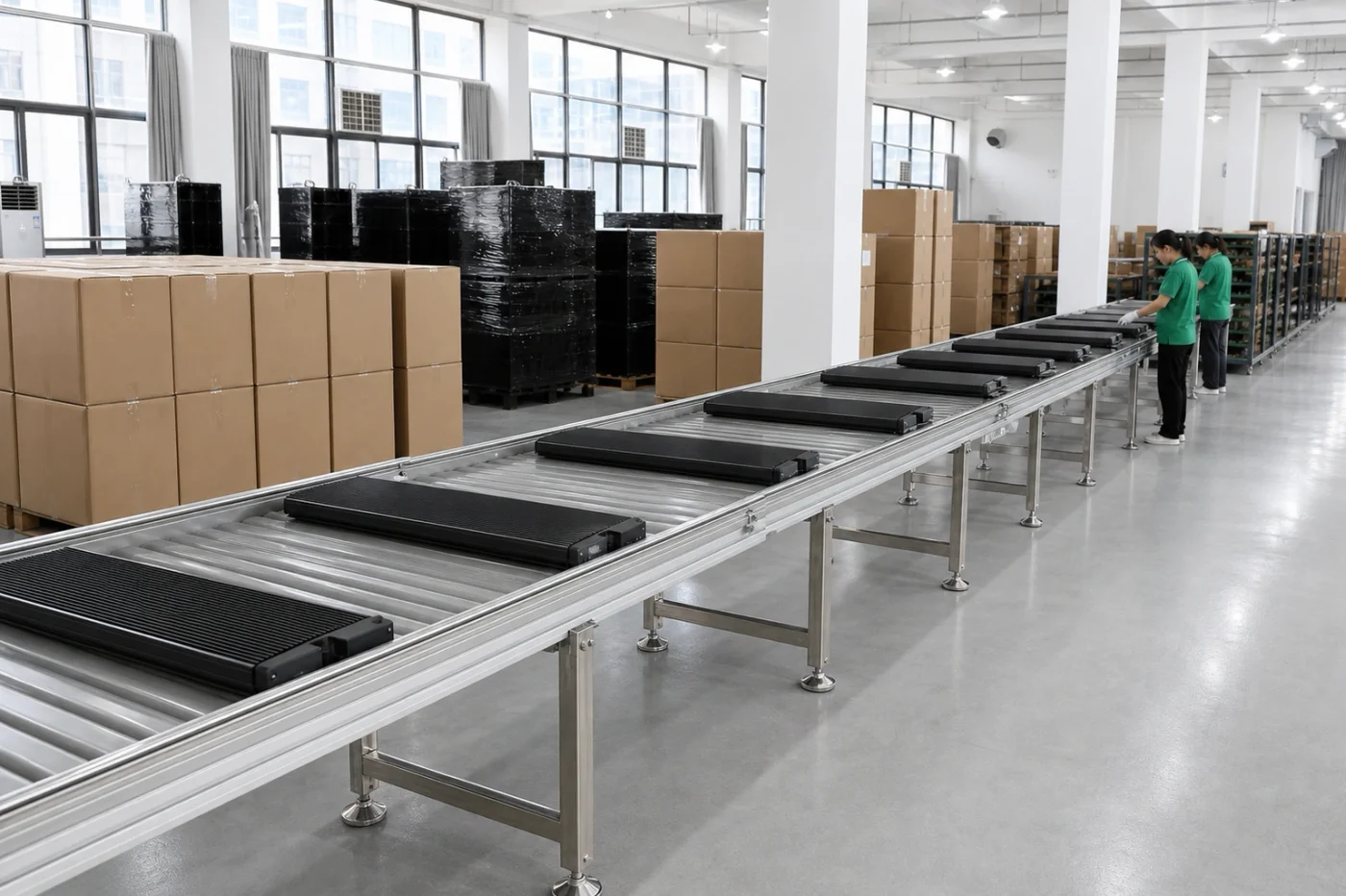
We have been manufacturing climate-control equipment in Fuzhou since 2003, and we have shipped to 80+ countries. We know what a hard winter looks like for a buyer, and we know what good service looks like for a buyer who is heating a building through it.
Practical steps for the next 90 days
If you are responsible for heating a building this winter — a home, a business, a warehouse, a venue — the next 90 days are when small equipment decisions turn into large bill differences. Three things to do now:
- Audit your current heating. What are you running, how many hours a day, what is the average thermostat setting? You cannot reduce what you have not measured.
- Identify the zones where far-infrared would replace convection. A living room, a home office, a drafty bedroom, a covered patio, a workshop bay. Start with one zone; measure the electricity difference over a month.
- Order early. Heating-season equipment demand spikes in November. The 4-week lead time you see in October becomes 8 weeks in December. If you know you need extra capacity, order it now.
Sources
The analysis in this article draws on the following public sources, all current as of September 2026:
- World Meteorological Organization (WMO) — El Niño / Southern Oscillation update, summer 2026
- UK Met Office — ENSO outlook, autumn 2026 (via BBC, HuffPost coverage)
- China Daily and South China Morning Post — Asia-Pacific winter 2026–27 coverage
- Saxo Bank — quarterly outlook, autumn 2026
- Bloomberg — European energy market coverage, Q3 2026
- Ember Climate — European electricity review, summer 2026
- Internal JHHEATSUP / JHCOOL field data, Fuzhou R&D lab
Need a heating plan for a specific building? Send us the room dimensions, the ceiling height, the country, and your current heating setup. We will send back a 3-zone heating plan with the right JHHEATSUP units and a projected electricity saving — free, no commitment.